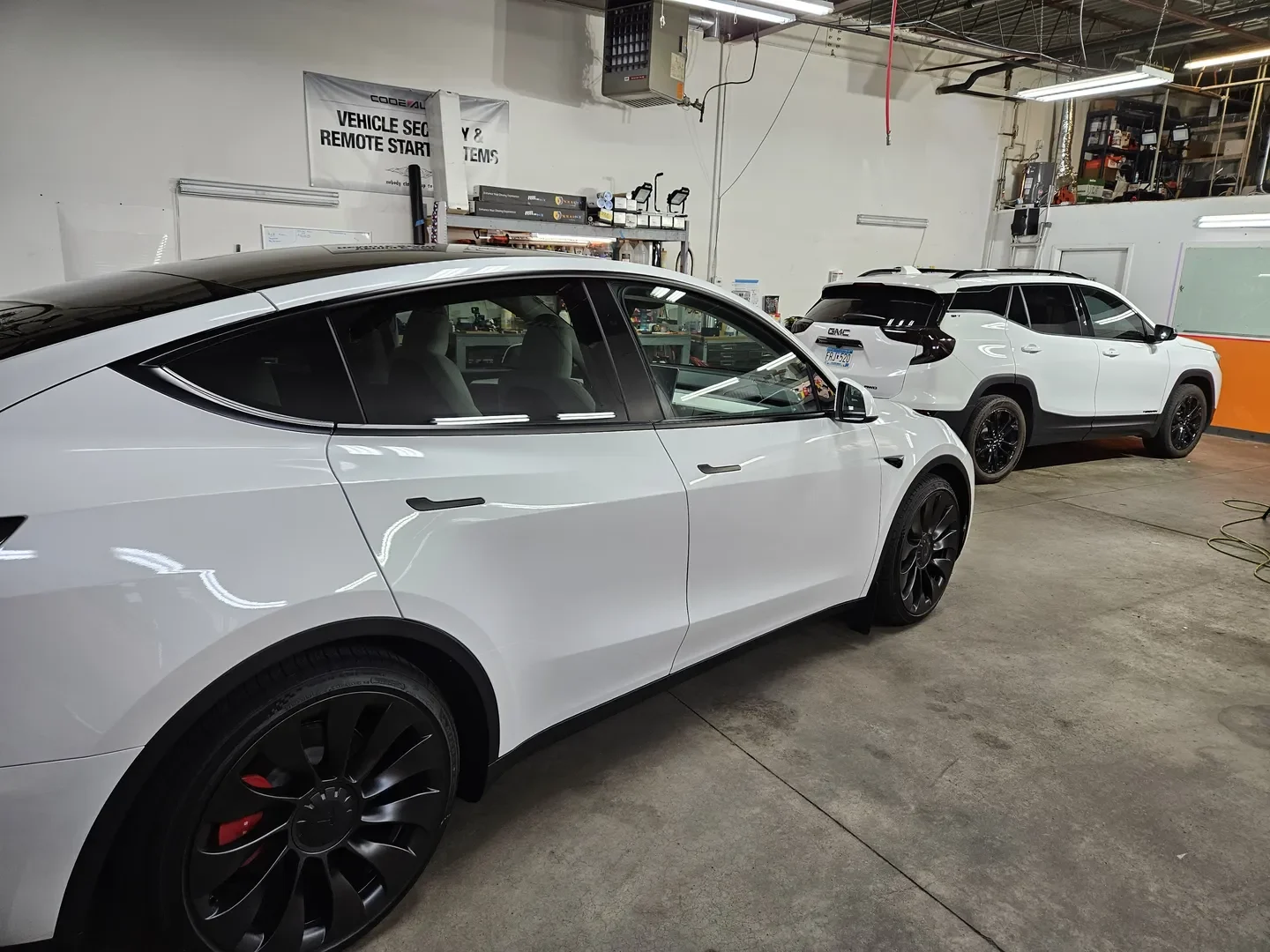
Protecting your car and your skin from the Minnesota sun is easier than most drivers expect. UV protection window tinting blocks harmful rays, reduces interior fading, and keeps your cabin cooler so your vehicle looks better and lasts longer.
This guide breaks down how UV tint works, which film types make sense for Minnesota drivers, and why professional installation matters if you want results that actually last. If you want a clean, hassle-free install, Polarizauto in Ramsey provides professional tinting designed for long-term performance and comfort.
Understanding UV Protection Window Tinting
UV window tinting helps reduce ultraviolet exposure while also cutting heat and glare inside your vehicle. It protects your skin during daily driving and helps preserve your interior over time.
How UV Window Tinting Works
Window tint is a thin film applied to the inside of your vehicle’s glass. It works by absorbing and reflecting sunlight so less UV radiation enters the cabin. This slows down fading and damage to leather, plastics, and fabric surfaces.
Many modern films also reduce infrared heat, which is what causes your car to feel hot when parked. A properly installed tint creates an even layer across the glass, which is important for durability in Minnesota’s changing temperatures.
Types of UV Protective Films
Different films offer different levels of performance, so it helps to know what you are choosing.
- Dyed film is the most affordable option and improves privacy, but it does not block as much heat and can fade over time
- Metalized film reflects heat and UV more effectively and adds durability, though it may interfere with signals like GPS or radio
- Ceramic and carbon ceramic films provide the highest level of UV and heat rejection without signal interference and tend to last the longest
Most drivers looking for comfort and long-term value choose ceramic-based films.
UV Blocking Technology Explained
UV-blocking films rely on a combination of absorption, reflection, and scattering. Some materials absorb UV rays and convert them into harmless heat, while others reflect or deflect the rays away from the glass.
High-quality films block at least 99 percent of UV rays. This rating is more important than how dark the tint appears, since even lighter films can provide strong protection.
Benefits of UV Protection Window Tinting in Minnesota
Window tint improves comfort, protects your vehicle, and makes driving easier in both summer and winter conditions.
Reducing Harmful UV Exposure
Quality window tint blocks most UVA and UVB rays, which helps protect your skin during long drives. This is especially important in Minnesota where sun exposure changes throughout the year.
Winter glare from snow can be just as intense as summer sunlight. Tint reduces that glare and helps you see more clearly without straining your eyes.
Protecting Your Car Interior
UV exposure is one of the main causes of interior wear. Over time, it can lead to fading, cracking, and discoloration in your seats and dashboard.
Tint helps slow this process by reducing both UV exposure and heat buildup. This keeps materials in better condition and helps maintain your vehicle’s value.
Improving Comfort and Efficiency
By reducing heat inside the cabin, window tint makes your vehicle more comfortable to drive. Your air conditioning system does not have to work as hard, which can improve efficiency over time.
You may also notice more stable temperatures during colder months since tint helps reduce harsh light and temperature swings.
Choosing the Right UV Window Tint for Minnesota
The best tint balances protection, visibility, and legal compliance. Minnesota drivers need a solution that works in both hot summers and cold winters.
Key Factors to Consider
Look for films that block at least 99 percent of UV rays and offer strong heat rejection. Durability is also important since freeze and thaw cycles can affect lower-quality films.
Ceramic and carbon films are a strong choice because they resist weather damage and do not interfere with electronics.
Recommended Tint Levels
For most vehicles in Minnesota, these ranges work well:
- Front side windows between 35 and 50 percent VLT for visibility and compliance
- Rear side and back windows between 20 and 35 percent VLT for privacy and heat control
Always confirm your tint meets current Minnesota laws before installation.
Professional vs DIY Installation
The quality of installation plays a major role in how long your tint lasts and how well it performs.
Why Professional Installation Matters
Professional installers use higher-quality materials and apply them with precision. This prevents common issues like bubbling, peeling, or uneven edges.
They also ensure your tint meets legal requirements and often provide warranty coverage. Polarizauto focuses on clean installation and long-term durability so you do not have to worry about redoing the job.
DIY Considerations
DIY tint kits cost less upfront, but they require time, patience, and the right conditions. Mistakes can lead to visible defects or reduced performance.
If you want reliable results and a clean finish, professional installation is usually the better option.
Minnesota Window Tint Laws
Minnesota has clear rules about how dark your window tint can be. These rules are based on visible light transmission levels.
Front side windows must allow more than 50 percent of light through. Windshield tint is limited to a strip at the top, and rear windows can be darker if your vehicle has proper mirrors.
Keeping documentation from your installer can help if you are ever asked to verify compliance.
Maintaining Your Window Tint
Taking care of your tint helps it last longer and perform better.
Cleaning Tips
Use a microfiber cloth and an ammonia-free cleaner. Spray the cleaner onto the cloth instead of directly onto the glass to protect the edges of the film.
Avoid abrasive materials and clean regularly, especially during winter when salt buildup can affect the film.
Signs It May Need Replacement
Watch for bubbling, peeling, or discoloration. These signs usually mean the film is no longer performing properly.
If you notice reduced clarity or increased glare, it may be time to have your tint inspected or replaced.
Why UV Protection Matters in Minnesota
Minnesota drivers face strong sun in the summer and intense glare from snow in the winter. Both conditions increase UV exposure over time.
Window tint helps reduce that exposure, protecting both your vehicle and your health. Choosing a high-quality film ensures you get consistent protection year round.
Choosing a Window Tinting Service in Minnesota
Finding the right installer is just as important as choosing the right film. Look for a shop that uses proven products, understands local laws, and offers clear warranty coverage.
Ask about film types, UV ratings, and installation methods before committing. A reliable shop will explain your options in simple terms and help you choose what fits your needs.
Polarizauto in Ramsey provides professional window tinting with a focus on long-term results, clear communication, and stress-free service.
Frequently Asked Questions
How effective is window tint at blocking UV rays
High-quality automotive films can block up to 99 percent of harmful UV rays, helping protect both your skin and your vehicle’s interior.
Is window tint legal in Minnesota
Yes, but it must meet specific light transmission limits depending on the window. Always confirm before installation.
What type of tint is best for UV protection
Ceramic and carbon ceramic films offer the best balance of UV protection, heat rejection, and long-term durability.
Can I get a ticket for illegal tint
Yes. If your tint does not meet Minnesota requirements, you may be fined and required to remove it.
How long does window tint last
Professional tint can last for many years with proper care, especially when using high-quality ceramic films.