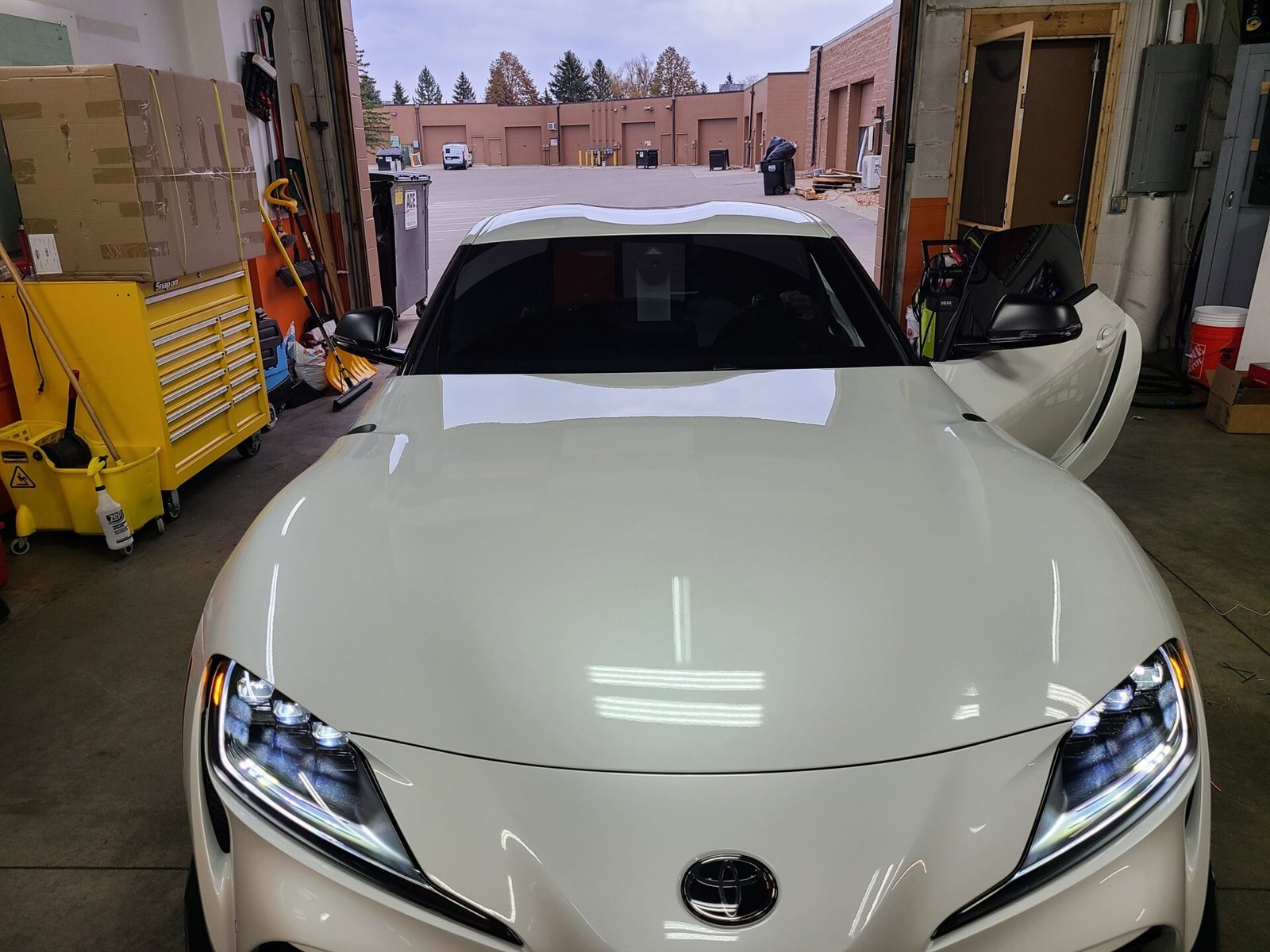
Auto ceramic window tint gives you stronger heat rejection and near-clear visibility without interfering with phones, GPS, or radio signals. It uses microscopic ceramic particles embedded in a multi-layer film to block infrared (heat) and ultraviolet (UV) light while maintaining a good visible light balance.
At Polarizauto, we tailor automotive ceramic window tint to each vehicle’s glass and local driving conditions. That’s how we help you help your cabin stay cooler and more comfortable year-round. Our installation prioritizes optical clarity, proper edge sealing, and long-term performance.
This article explains how ceramic tint works, compares it with other film types, and shows what features and VLT choices matter when you pick the best option for comfort, protection, and driving safety.
Understanding Car Paint Protection Film
Paint protection film (PPF) adds a clear, durable layer over your car’s paint to block chips, scratches, and UV damage. You’ll read what PPF is, why owners choose it, and how it compares to wax, ceramic coating, and vinyl wrap.
What Is Paint Protection Film?
Paint protection film is a thin, transparent urethane layer applied to painted surfaces. Installers cut and fit it to panels like the hood, fenders, mirrors, and full body, depending onthe coverage you choose.
PPF has self-healing topcoats that close small swirl marks and light scratches with heat or sun exposure. Thickness usually ranges from 6–8 mil for consumer films. Brands and film grades affect durability and cost.
Professionals use heat, tools, and trim around edges for a near-seamless look. DIY kits exist, but complex curves and door edges usually need a pro for long-lasting results.
Key Benefits for Car Owners
PPF mainly prevents rock chips and deep scratches that hurt resale value. If you drive on highways often or live in gravel areas, PPF reduces paint repairs and touch-ups. It also blocks UV fading and chemical stains, preserving clear coat shine for years.
The self-healing layer keeps minor marks from building up, so your car looks newer with less maintenance. You’ll save on repainting costs over the vehicle’s life. Warranties on installed PPF often cover yellowing and cracking for 5–10 years, depending on film grade and installer.
Differences Between PPF and Other Protection Options
PPF vs. wax: Wax sits on the surface for short-term gloss and water beading. It does not stop chips or deep scratches. Wax needs reapplication every few months.
PPF vs. ceramic coating: Ceramic coatings bond to paint and add hydrophobic properties and gloss. They resist light scratches but won’t stop rock chips. Coatings pair well with PPF; many owners coat exposed paint and film for extra protection.
PPF vs. vinyl wrap: Vinyl changes color or finish and is thinner. It protects against minor abrasions but not as well against rock chips. Vinyl is easier to remove and cheaper for style changes. PPF focuses on long-term paint preservation.
Car Paint Protection Film Cost Breakdown
You will see costs change mainly by how much of the car you cover, the film grade, and the installer’s time and rates. Expect specific dollar ranges for full versus partial jobs, a clear split between material and labor, and higher prices for larger vehicles.
Average Full and Partial Coverage Pricing
Partial coverage (front bumper, hood, mirrors) typically ranges from about $1,500 to $4,000, depending on film quality and labor. Many shops price a “front-end” kit for a mid-size sedan around $1,800–$2,800.
Full-vehicle protection commonly runs $3,500 to $9,000. Mid-size sedans often fall near $3,500–$5,500 with mid-range film. Large SUVs and premium cars can push $6,000–$9,000 when installers use premium ceramic-infused films.
Price examples:
- Partial front (compact car): $1,500–$2,500
- Mid-range full (mid-size sedan): $3,500–$5,500
- Full, premium film (large SUV): $7,000–$9,000
Material and Labor Costs Explained
Materials (PPF film) usually cost $2.50–$8.00 per square foot. Higher-end films add clarity, self-healing, and ceramic blends that raise the per-square-foot price. Shops may charge more for a branded premium roll.
Labor covers prep, pattern cutting, fitting, edge sealing, and trimming. Labor time often ranges from 6 to 20 hours, depending on coverage. Shops bill by hour, flat kit, or package, and regional labor rates change totals. Expect labor and misc fees of $500–$2,000 on many jobs.
Items that add cost:
- Edge sealant and paint correction
- Trim removal or complex curves
- Longer cure times and warranty packages
Cost by Vehicle Size
Vehicle size changes both material use and labor hours. Compact cars need less film and often finish in 6–10 labor hours for partial jobs. That keeps costs lower for smaller vehicles.
Mid-size sedans commonly require 10–14 hours for more extensive coverage, moving the total cost into the mid-range. Large SUVs and trucks increase film area and labor to 14–20+ hours, which can push a full wrap toward the high end of pricing.
Estimate ranges by size:
- Compact (partial): $1,500–$3,000
- Mid-size (partial/full): $2,500–$5,500
- Large SUV/truck (full): $5,000–$9,000
Factors Influencing Paint Protection Film Cost
Several factors drive what you will pay for PPF. The size of the area covered, the film brand and its features, and where the installer works are the largest cost drivers. Each affects parts, labor time, and final price.
Coverage Area and Installation Complexity
The amount of your vehicle coverage directly sets the material cost. Partial front kits (bumper, partial hood, mirrors) use far less film than full-vehicle installs, so they usually run in the low hundreds to mid thousands, depending on your car.
Full-front and track packages add protected zones like fenders, A-pillars, and rocker panels, which raise both film and labor. Complex installations take more labor time and may add extra charges.
Tight curves, textured surfaces, and intricate body lines require hand-trimming and heat-shaping. That increases installation time and the skill level needed. Installers often price jobs by estimated hours or by preset packages; ask for line-item breakdowns showing material vs. labor.
Film Quality and Features
Film grade has a big effect on installation cost. Basic films block chips but may yellow and show wear faster. Premium TPU films offer self-healing topcoats, strong UV resistance, and clearer optics; they cost more per square foot.
Some brands include longer warranties, which can justify higher upfront prices. Special finishes and added layers change the price, too. Matte or color-shift films, thicker clear films, and hydrophobic topcoats require different materials and more careful application.
If you want a long warranty and better optical clarity, expect higher material charges and possibly higher installer rates because the work must meet tighter quality standards.
Regional Price Variations
Your location changes what installers charge. Urban areas with high demand and higher rent typically have higher installation costs than smaller towns. Labor rates vary; certified installers in major metro markets often charge premium hourly rates for experienced techs.
Local competition can lower prices, while scarce certified shops can push them up. Shipping costs for certain film brands or specialty color PPF can add to material expenses if you’re far from suppliers.
Always get at least two detailed quotes that list film brand, coverage map, and labor hours so you can compare regional differences and the installer’s quoted scope.
Types of Paint Protection Films and Their Pricing
You will choose a film based on how you want the car to look and how long you want the protection to last. Price depends on finish, material, and whether installers include a warranty or pattern cutting.
Gloss, Matte, and Colored PPF Options
Gloss PPF keeps the factory shine and usually costs less than specialty finishes. Expect gloss partial-front installs to start around $500–$1,500 for sedans. Full-body gloss wraps commonly run $1,500–$6,000, depending on vehicle size and installer skill.
Matte PPF changes the sheen and hides minor swirl marks. Matte film costs more to install because edges and seams require extra care to avoid glossy lift spots. Budget for roughly 10–30% above comparable gloss pricing.
Matte PPF also needs careful maintenance; installers may charge for matte-safe coatings. Colored PPF (tinted or opaque) adds pigment or finish variations.
It costs more than clear gloss because manufacturing and color-matching raise the material price. Expect colored PPF pricing near the high end of the scale used for full or partial coverage. Warranties and repair options can vary, so check what’s covered for color fade or delamination.
TPU and Other Material Comparisons
TPU PPF is the modern standard for durability, clarity, and self-healing. It resists yellowing and repairs light scratches with heat. TPU films typically carry multi-year warranties and sit at the top of price ranges. For a typical install,
TPU film materials push quotes upward; you might see $7–$15 per square foot for premium installs.
Lower-cost films (PVC or older polyester blends) reduce upfront cost but age faster and can yellow or crack in 1–3 years. They suit short-term ownership or budget builds. Some hybrid films aim to balance price and performance, but often lack the long warranties of TPU.
When comparing quotes, ask which material the shop uses, the warranty terms, and whether the price covers pattern cutting and edge sealing. Those details explain most price gaps between similar-coverage quotes.
Choosing a Paint Protection Film Brand and Installer
You should pick a film and installer that match your budget, vehicle type, and expected wear. Focus on film clarity, thickness, and installer experience to avoid rework and cost overruns.
Overview of Leading PPF Brands
Look at proven film makers like XPEL and Llumar first. XPEL often sells multi-layer urethane films with strong self-healing and high gloss. Llumar markets films with good clarity and competitive pricing.
Compare thickness (measured in mils), warranty terms, and UV resistance when you shop. Check independent tests or dealer lists for real-world resistance to rock chips and staining. Ask for sample swatches and pictures from completed installs on your car model.
Some films include ceramic-like topcoats for easier cleaning. Keep brand certificates or cut-sheets to compare material specs side-by-side.
Finding a Qualified PPF Installer
Choose an installer with documented shop hours, standardized prep steps, and a portfolio showing installs on vehicles like yours. Prioritize shops certified by the film brand (for example, XPEL-certified) because certification usually means formal training and pattern software access.
Ask about pattern sources, machine-cut templates, and how they handle edges and seams.
Get a written estimate that lists film brand, coverage area, labor hours, and expected cure time. Read recent customer reviews and request photos of completed full-body or partial-front installs to check fitment and edge sealing quality.
Warranty and Aftercare Considerations
Review both the film manufacturer’s warranty and the installer’s warranty. Manufacturer warranties cover defects like yellowing or delamination, while installer warranties cover fit and workmanship. Get warranty documents in writing and confirm if they transfer when you sell the car.
Follow the shop’s aftercare advice, including wait times for washing, approved cleaners, and whether ceramic coatings can go over the PPF. Keep your invoice and photos for any warranty claims. If repairs are needed, ask about repair times and if transportation or scheduling will affect costs.
DIY vs. Professional Paint Protection Film Installation
Consider cost, time, and finish quality when choosing between DIY and professional PPF. Decide how much of your car you want covered, what tools you’ll need, and whether you want a warranty or a guaranteed fit.
Cost and Value Analysis
DIY kits usually cost between $100 and $1,200 for film only, depending on coverage. Small partial-front kits cost less; full-vehicle rolls cost more. Professional installation adds labor and skill costs, often ranging from $500 to $6,000, depending on coverage and complexity.
DIY saves on labor but requires you to buy tools and accept a higher risk of bubbles, edge lifting, or trim misfits.
Professionals charge more, but deliver better alignment, fewer seams, and often a warranty. If you care about resale value, a professional job can pay off. For hood and mirror protection, careful DIY can be a good budget choice.
PPF Rolls and Installation Kits
PPF rolls come in different thicknesses, finishes, and widths. Buying a roll lets you custom-cut panels and can lower per-panel costs compared to pre-cut kits. Rolls work well for extensive coverage or multiple jobs, but you need to measure panels carefully and handle large sheets without creasing.
DIY tools include a squeegee, slip solution, heat gun, utility knife, and edge tools. High-quality rolls and tools make installation easier. Professional installers use calibrated heat guns, pattern software, and paint-safe tables for tight edges and minimal seams.
If you plan multiple installations or full coverage, invest in a good roll and tool kit; otherwise, pre-cut kits can make your first attempt simpler.
Clear Comfort That Lasts
Auto ceramic window tint delivers real heat rejection and strong UV blocking while preserving visibility and signal connectivity. Its advanced design offers measurable cabin cooling, reduced glare, and long-term clarity for your vehicle windows.
At Polarizauto, we install ceramic tint films with precision cutting and careful prep. This way, you get consistent performance and a sleek finish tailored to your needs. Every installation is quality-checked and aligned with your local laws and comfort priorities.
Ready to upgrade your ride’s comfort, protection, and visibility? Contact us to schedule an appointment online to explore ceramic tint options that fit your vehicle and driving style.
Frequently Asked Questions
This section explains price ranges, what affects them, and common extras so you can plan a budget. You’ll find concrete numbers for typical jobs and the main reasons quotes differ.
What is the average cost of applying paint protection film to a vehicle?
For a mid-size sedan with partial front coverage, expect about $2,500 to $5,000. Full-body jobs on larger vehicles often cost $5,000 to $9,000 or more with premium film.
How do the costs vary for full-body vs. partial car paint protection film application?
Partial coverage (hood, fenders, front bumper) often costs $500 to $3,000, depending on film and labor. Full-body coverage usually starts around $2,000 and can reach $7,000–$9,000 for premium materials and large vehicles.
Can the price of paint protection film installation differ based on vehicle size, such as for an SUV?
Larger vehicles use more film and labor, so SUVs and trucks usually cost more than compact cars. Labor hours can increase from about 6–10 for compact partial jobs to 16–20 for full coverage on big SUVs.
Is there a general cost per square foot for paint protection film?
Budget about $2.50 to $8.00 per square foot for the film itself. Specialty films cost more, and labor adds to the total price.
What factors influence the overall cost of car paint protection film installation?
Film grade, coverage level, and vehicle size drive most cost differences. Installer experience, regional labor rates, complex body shapes, and prep work like paint correction also raise prices.
Are there any additional costs associated with paint protection film maintenance over time?
Maintenance costs are usually low. You might pay for professional cleaning, reapplication for damaged panels, and edge sealants. Warranties or extended care plans may add to the initial cost but can lower future repair expenses.