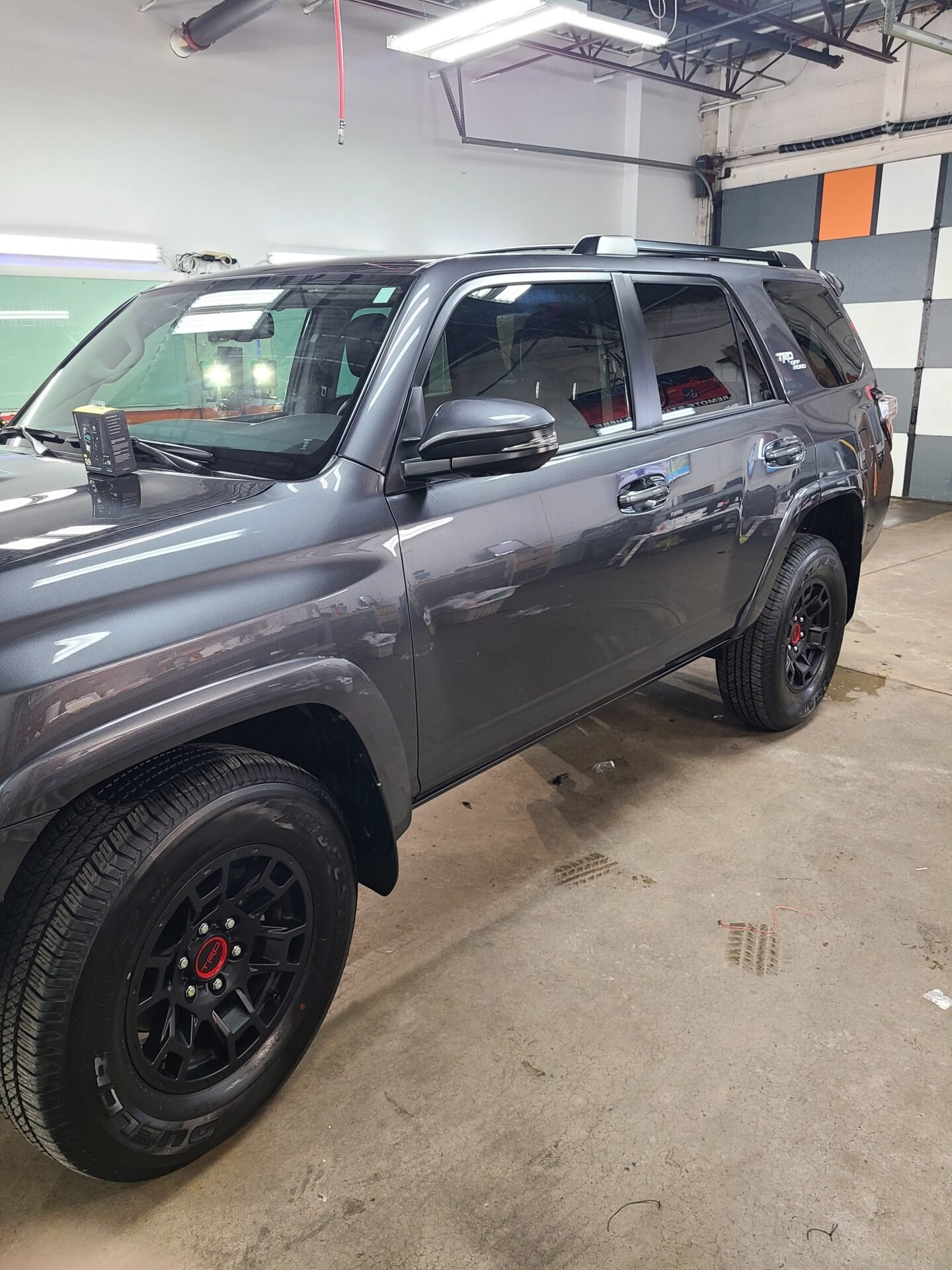
New Jersey roads can be rough on vehicle paint — from winter salt and gravel to coastal sand and summer UV. Paint protection film (PPF) gives your car an invisible shield that absorbs damage before it reaches the paint, keeping your finish smooth and glossy for years.
At Polarizauto, we use precision-cut PPF from leading brands to deliver clean installs that match your vehicle’s contours. Our technicians tailor each job to local driving conditions and weather challenges so your protection lasts season after season.
This article explains how paint protection film works, why it’s ideal for New Jersey vehicles, how professional installation compares to DIY, and which packages deliver the best value and coverage for your car.
What Is Automotive Paint Protection Film?
Paint protection film (PPF) is a thin urethane film applied to your vehicle’s painted surfaces to shield them from chips, scratches, bug stains, and UV damage. It stays nearly invisible, preserves factory paint, and can be cut to fit full panels or high-impact areas like the hood and bumper.
How Paint Protection Film Works
PPF bonds to your car’s paint with a pressure-sensitive adhesive that keeps the film tight and smooth. When stones or road debris hit the surface, the urethane film absorbs the impact instead of the clear coat or paint. That prevents chips and deep scratches from forming.
Installers use a slip solution and squeegee to remove bubbles and position edges under trim. With proper installation, seams remain out of sight, and the adhesive stays stable in New Jersey’s cold winters and hot summers.
Types of Paint Protection Film
You can choose clear bra (gloss) PPF for a shiny look or matte PPF to match matte paint finishes. Standard urethane films focus on impact resistance, while high-end PPF adds thicker topcoats and stronger adhesives for longer life.
Kits are available for partial coverage—like hood, mirrors, and fenders—or full-vehicle wraps. Some films come pre-cut for specific makes and models. Choose a thicker film for frequent highway driving and a harder topcoat if you want extra resistance to staining from road salt.
Self-Healing and Hydrophobic Properties
Many modern PPF products include a self-healing top layer that smooths light swirl marks and fine scratches with heat. Sunlight or warm water helps the urethane return to its original shape, keeping the surface looking clean.
Hydrophobic topcoats make water bead and slide off, which reduces water spots and eases washing. That coating also helps repel bug residue and road grime, so you spend less time cleaning. Both self-healing and hydrophobic features extend PPF life and keep your paint looking factory-fresh.
Benefits of Paint Protection Film for New Jersey Vehicles
Paint protection film gives your car a clear layer that guards the paint from chips, scratches, and sun damage. It helps keep your vehicle looking new and can save you money on repairs over time.
Defense Against Road Hazards
PPF acts as a sacrificial layer on high-impact areas like the hood, front bumper, mirrors, and rocker panels. When rocks, gravel, or road debris hit your car, the clear bra absorbs the force and prevents chips and scratches to the factory paint.
This reduces the need for local touch-ups or full panel repainting. PPF comes in varying thicknesses and hardness. Thicker films resist heavy stone chips better, while films with self-healing topcoats allow small surface scratches to disappear with heat.
Professional installation ensures seams and edges are tight, which lowers the chance of lifting from regular road grime or car washes.
Preserving Vehicle Resale Value
A well-maintained exterior makes a measurable difference when you sell or trade your vehicle. Buyers and dealers look for paint flaws on the hood, fenders, and bumpers—areas PPF protects most. By preventing visible chips and swirl marks, the film helps your car retain a near-factory finish.
Documenting PPF coverage on key panels also reassures prospective buyers. If you pair PPF with a ceramic coating, the finish stays glossier and is easier to clean. That combination can reduce reconditioning costs before resale and improve auction or trade-in offers.
Impact of Weather Conditions in New Jersey
New Jersey exposes cars to a wide range of weather threats: winter road salt, spring sand, summer UV, and coastal salt spray in shore towns. Salt and chemicals accelerate paint corrosion if bare metal or clearcoat gets chipped.
PPF blocks salt and grit from directly contacting the paint, slowing corrosion and paint lift. UV-resistant topcoats in modern PPF also reduce fading from long summer sun exposure.
In coastal or suburban areas where bird droppings and tree sap are common, the film prevents etching and makes contaminants easier to wash off. Regular washing with pH-neutral soap keeps the film clear and extends its protective life.
Independent Data on Road Salt and Paint Corrosion
The U.S. Federal Highway Administration (FHWA) reports that road salt causes more than $5 billion in vehicle corrosion damage each year across northern states.
Salt and moisture accelerate rust once paint is chipped, especially on hoods and rockers. PPF acts as a barrier layer that prevents salt and de-icing chemicals from contacting painted metal. For New Jersey drivers, this protection is critical during extended winter road-salt use.
Professional Paint Protection Film Installation in New Jersey
You can protect your vehicle with a tailored PPF package that fits how and where you drive. Skilled shops in New Jersey combine paint correction, precise film cutting, and optional ceramic coating to deliver long-lasting results.
Why Professional Installation Matters
Precise fit and edge management prevent lifting, bubbling, and dirt traps. Professional installers use factory-fit templates or custom plots and heated tools to wrap edges on bumpers, fenders, headlights, and mirrors.
This matters most in high-impact zones like the front bumper and hood, where rock chips occur. Technicians perform paint correction first when swirl marks or scratches exist.
Removing surface defects ensures the film lies smoothly and looks invisible, especially with glossy or matte PPF options. Shops often offer SunTek and other premium films that resist yellowing and provide self-healing properties.
Choosing a certified installer protects your investment. Proper adhesion, seam placement, and post-install inspection reduce the chance of early failure. Many pros add a ceramic coating over PPF for extra hydrophobic properties and easier washing.
Installation Process Overview
The shop will start with a full vehicle inspection and paint correction if needed. They wash, decontaminate, and clay the paint, then polish to remove swirls so the film bonds cleanly. Next, installers cut or plot the PPF—SunTek and similar brands have pre-cut kits for common models.
They apply a slip solution, position the film, squeegee out fluid, and heat-wrap edges. For matte PPF, they use special techniques to preserve texture and avoid gloss changes. Final steps include trimming, edge sealing, and a quality check for bubbles, dust, or misaligned edges.
If you choose a ceramic coating over the PPF, they apply it after the film cures for extra gloss and chemical resistance. Ask the shop about warranties, recommended cure times, and maintenance to keep your film performing for years.
Comparing Paint Protection Film to Other Solutions
PPF gives you a thick, clear barrier that guards against chips and scratches. Other options focus more on shine, style, or heat control, so pick what matches how and where you drive.
Paint Protection Film vs. Ceramic Coatings
PPF protects from rocks, road grit, and small impacts. The film is several mils thick and absorbs force; it can self-heal light scratches with heat. That makes PPF a better choice if you drive New Jersey highways or rural roads where debris hits are common.
Ceramic coatings bond to paint and create a hard, hydrophobic layer. They make washing easier and boost gloss, but they do not stop chips or deep scratches. Many owners use ceramic on top of PPF for extra slickness and UV resistance.
If you want physical impact protection first, choose PPF. If you want long-lasting shine and easier cleaning but no impact defense, choose ceramic coating. Combining both gives paint protection and improved appearance.
Paint Protection Film vs. Vinyl Wraps
PPF is clear and meant to be invisible while protecting the factory finish. Vinyl wraps change color or texture and are thinner, so they don’t stop rock chips as well. If you want to keep the original paint and prevent damage, PPF is the safer option.
Vinyl is cheaper for full-color changes and easier to remove without heat. It also shows scratches more easily and can lift at the edges if installed poorly. Use vinyl when you want a new look; use PPF when you want protection without altering appearance.
You can use both: PPF on high-impact zones (hood, bumper, mirrors) and vinyl on lower-risk panels for style. That split approach balances cost, protection, and design.
Paint Protection Film Combined with Window Tinting
PPF protects painted surfaces; window tinting reduces interior heat and protects upholstery. In New Jersey summers, tinting lowers cabin temperature and blocks UV rays that fade dash and seats. Pairing tint with PPF covers both exterior paint and interior climate concerns.
Installation timing matters. Apply PPF before full-window tinting services if both are done by the same shop to avoid scheduling conflicts. Use quality films for both: opt for high-grade PPF for impact resistance and ceramic or hybrid window films for better heat rejection and UV protection.
When you install both, request warranty details that cover installation overlap. Good shops will map protection zones so PPF edges don’t interfere with tint lines on pillars or trim.
Popular Paint Protection Film Packages and Service Options
You’ll see packages that focus on high-impact zones, full-vehicle wraps, and specialty finishes like matte film. Prices depend on film brand, coverage area, and whether technicians use pre-cut patterns or hand-fit pieces.
Front End Packages
Front-end packages protect the most chip-prone areas: hood, front bumper, fenders, and mirrors. These are the most affordable common options and stop stone chips and bug damage where most impacts occur.
Choose partial or full-front coverage. Partial covers the leading edge of the hood and bumper. Full-front extends up the hood, over the headlights, and around the bumper for better protection. Many shops use pre-cut patterns from brands like SunTek or XPEL to speed installation and reduce seams.
Expect 6–8 mil film thickness for standard clear bra PPF and a self-healing topcoat to remove light swirl marks. Installation time is usually 2–6 hours, depending on curves and prep work. Ask about warranty length, stain resistance, and whether headlights are included.
Full Vehicle Coverage
Full vehicle PPF wraps every painted surface, including doors, roof, rocker panels, and trunk. This option provides the most long-term protection and preserves resale value by keeping original paint intact.
Installers often prefer higher-grade films for full wraps—8 mil or thicker—with stronger adhesives to handle edges and seams. Expect 1–3 days of work and significant labor time for complex curves. Shops may offer package tiers that add windshield, mirrors, and door jambs.
Costs vary widely. Get written pricing that lists film brand, film thickness, and warranty specifics. Confirm whether the quote includes paint correction before film, edge sealing, and final polishing.
Custom and Matte PPF Packages
Custom packages let you mix coverage areas and film types to match your needs and budget. You can protect only rockers and rear quarters, add headlight film, or combine gloss PPF up front with matte PPF on the hood.
Matte PPF preserves or converts a satin finish without gloss. It needs careful handling: installers must use film formulated for matte surfaces to avoid uneven texture or visible seams. Matte film resists gloss changes but can show fingerprints, so ask about maintenance.
Ask shops if they stock SunTek or other branded matte films and whether they will perform paint correction first. Custom work often requires hand-fitting, so labor costs rise. Always request photos of similar installs and a clear warranty that covers yellowing and lifting.
Year-Round Protection with Professional Precision
PPF keeps your car’s paint safe from chips, scratches, and salt corrosion — essential for driving through New Jersey’s changing seasons. Whether you commute on the Turnpike or cruise the shore, PPF helps your vehicle maintain its factory look and long-term value.
At Polarizauto, we install durable, precision-cut PPF designed for New Jersey roads and weather. Every project is inspected for fit, clarity, and full warranty compliance, so your protection stands the test of time.
Want to protect your vehicle’s finish before next season hits? Schedule a consultation today and explore PPF options that fit your driving habits and style.
Frequently Asked Questions
This section answers common questions about PPF brands, prices, installer choices, and lifespan in New Jersey. It focuses on what you can expect to pay, which films perform well, and how to pick an installer near you.
What are the best-rated paint protection films available in New Jersey?
Top-rated films you will find locally include XPEL, 3M, and LLumar. Certified shops use these brands for their durability, self-healing top coats, and warranty support. Some shops also offer premium films with matte or colored finishes. Ask for brand names and warranty details before making your decision.
How much typically does it cost to install paint protection film on a vehicle in New Jersey?
Full-front kits (hood, fenders, bumper) usually cost $800 to $2,000, depending on the film brand and shop. Full-vehicle coverage often runs $3,000 to $8,000 or more for high-end cars and complex installs.
Smaller packages like headlights or mirrors often cost $150 to $500. Labor skill, shop location, and surface prep can increase the final price.
What are the differences in cost and quality for various paint protection films offered nearby?
Higher-cost films from XPEL and 3M include better self-healing, thicker layers, and longer warranties. Lower-cost options may protect against chips but can yellow, peel, or lose coverage sooner.
Shops charge more for factory-trained installers and for finishes like matte or color-stabilized topcoats. Compare film specs, warranty terms, and installer certifications to judge value.
Can you recommend any reputable paint protection film installers in South Jersey?
Look for shops with manufacturer certification from XPEL, 3M, or LLumar and strong customer reviews. Businesses with long local experience and published warranties, such as regional detailers and wrap studios, usually deliver better results.
Call shops to ask about certification, sample installs, and whether they use plotter-cut patterns for your vehicle model. Request before-and-after photos and written warranty details.
What factors should I consider when choosing a paint protection film for my vehicle?
Consider film thickness, self-healing properties, UV resistance, and warranty length. Check if the film supports matte finishes if your paint is satin or matte. Factor in installer certification, local climate (salt and winter roads), and how long you plan to keep the car. Ask about maintenance needs and stain resistance before committing.
How long does a professional paint protection film application usually last?
Good-quality PPF applied by a certified shop typically lasts 5–10 years on most vehicles. Some premium films and proper maintenance can extend protection beyond a decade. Lifespan depends on product quality, sun exposure, road salt, and how well you maintain the film. Keep installation and warranty paperwork for future claims.